The Rise of Marina, CA: Why Investors and First-Time Buyers Are Flocking Here
Marina, Real Estate, Monterey County
The Rise of Marina, CA: Why Investors and First-Time Buyers Are Flocking Here
Is Marina CA a good place to live if you’re a first-time buyer, investor, or young family priced out of other Monterey Peninsula markets? Increasingly, the data says yes. Marina has shifted from a quiet former military town to one of the Peninsula’s most compelling growth stories, combining coastal access, a young and diverse population, and long-term redevelopment that is still unfolding.

Marina’s Transformation: From Military Town to Growth Market
For decades, Marina sat in the shadow of Monterey, Pacific Grove, and Carmel. The closure of Fort Ord in the 1990s left large swaths of land in transition, and for a while, the city felt like a place between chapters. Today, that chapter has clearly turned. Anchored by California State University Monterey Bay (CSUMB), new housing communities, and major public investment in infrastructure and open space, Marina has emerged as one of the most dynamic pieces of the Monterey County real estate puzzle.
For first-time buyers and young families, the draw is straightforward: coastal living, relative attainability, and room to grow. For investors, Marina offers something increasingly rare on the Peninsula—a market where you can still buy into a city that is actively being rebuilt around long-term drivers of demand: higher education, defense, tourism, and outdoor recreation. When you ask, “Is Marina CA a good place to live?” you are also asking whether it is a smart place to plant roots before the story is fully priced in. The evidence points to yes.

Direct access to Marina State Beach gives residents daily, low-traffic coastal escape.
Market Data: Attainable Coastal Pricing in Context
On the Monterey Peninsula, the first barrier many buyers hit is simple: price. While Carmel, Pebble Beach, and Pacific Grove regularly see seven-figure entry points, Marina has remained one of the more attainable coastal markets. Recent data from major portals shows median values clustering in the high-$800,000s to low-$900,000s, with some sources reflecting closed sale medians above $900,000 as the market has heated up. Using a blended view of Zillow, Trulia, and other estimates, Marina’s typical home value centers around roughly $880,000–$900,000, making the oft-cited ~$884K benchmark a reasonable shorthand for the city’s median price point.
In practice, that means buyers can still find single-family Marina California homes near or even below the $900,000 mark—something that is increasingly difficult in neighboring coastal ZIP codes. For a first time buyer Monterey County household with strong income but limited down payment, Marina often represents the only realistic path to owning near the ocean without moving inland to Salinas or further north along Highway 101.
Demographically, Marina also looks different from many of its neighbors. Approximately 20.6% of residents are under 18, giving Marina the highest share of children on the Peninsula and underscoring its role as a family-oriented city. For young buyers weighing Marina CA real estate against more established but older communities, that age profile is a clear signal: this is a place where schools, parks, and kid-friendly amenities matter, and where the next generation is already present.
Diversity and Community Character: A Genuine Working City
Marina is not a resort town that empties out midweek. It is a genuine working community with deep roots and a broad mix of cultures. Niche.com ranks Marina as the #37 Most Diverse Place in California and gives the city an A+ rating for diversity. That ranking reflects what you see on the ground: families who have been here for generations, new arrivals working in hospitality and education, military and defense personnel, and students from across California and beyond attending CSUMB and nearby institutions.
This diversity translates into a community character that feels grounded rather than curated. You’ll find local taquerias, independent cafes, small markets, and long-standing service businesses rather than a row of national luxury brands. For many buyers asking whether Marina CA is a good place to live, this is part of the appeal: a city that reflects real life on the Peninsula, not just its postcard moments.
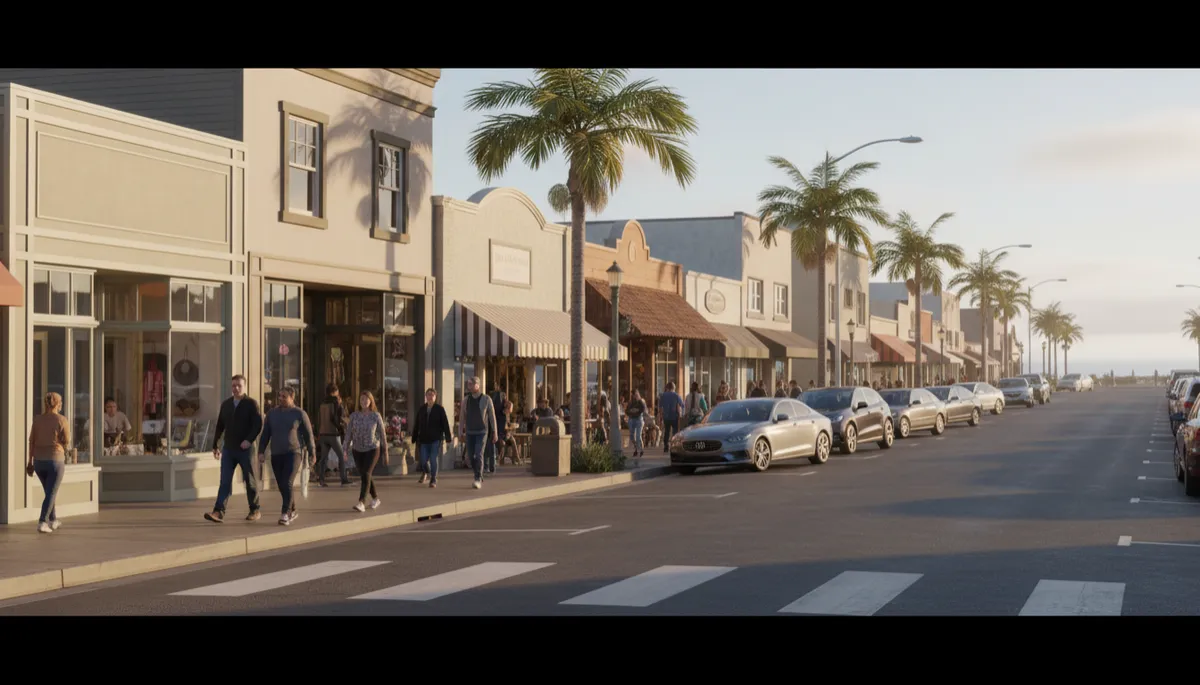
Marina’s main corridors blend local businesses, everyday services, and a diverse resident base.
Fort Ord Redevelopment: Buying Before the Story Is Finished
The single biggest driver of Marina’s long-term upside is the ongoing transformation of the former Fort Ord military base. Since Fort Ord’s closure, thousands of acres have been repurposed into CSUMB, new residential neighborhoods, retail, parks, and preserved open space. Yet, critically, the work is not finished. Habitat management plans, transportation upgrades, new park infrastructure, and mixed-use civic projects are still moving through planning and construction phases across the former base.
For buyers, that means the full value of Marina’s land, location, and infrastructure is not yet fully reflected in today’s prices. As roadway connections improve, the Fort Ord Dunes State Park campground opens, and additional institutional and civic projects come online, the daily experience of living in Marina will continue to improve—typically a positive signal for long-run property values in any Monterey County real estate submarket tied to that growth.
One of the clearest examples is the Sea Haven area and other new-construction communities on former Fort Ord land. These neighborhoods offer modern floor plans, energy-efficient construction, and community amenities that simply do not exist in older coastal housing stock. For a deeper look at what it actually costs to buy into this side of Marina, see What New Construction Actually Costs in Marina, which breaks down pricing, HOA structures, and realistic monthly numbers for today’s buyers.
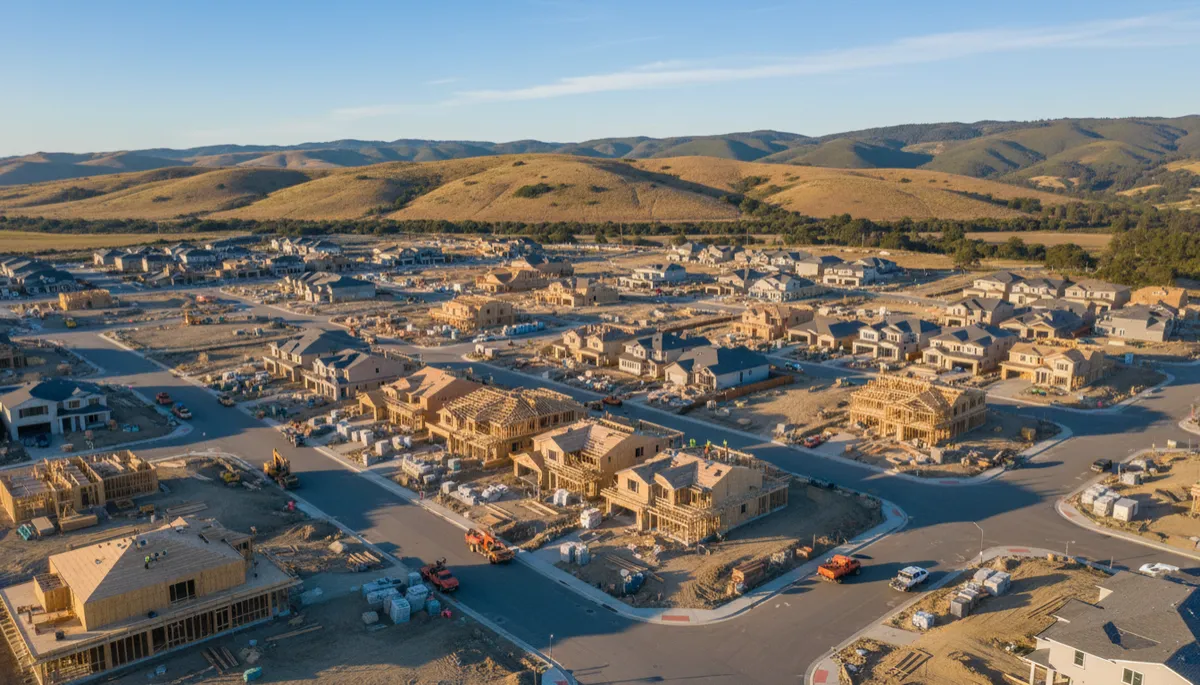
Ongoing Fort Ord redevelopment continues to add modern housing and long-term infrastructure.
Beach Access and Outdoor Lifestyle: Coastal Living Without the Premium
Marina’s coastline is one of its most underrated assets. Marina State Beach is known for its dramatic sand dunes, wide sandy stretches, and strong coastal winds that attract hang gliders and kite surfers. For residents, it means daily access to ocean sunsets, beach walks, and trail systems that wind through preserved dunes and coastal scrub—without the congestion or tourism intensity of more famous nearby beaches.
The broader outdoor lifestyle is a core part of why Marina CA is a good place to live for families and remote workers. Within a short drive, you have hiking and biking on the Fort Ord National Monument, surfing opportunities along the Monterey Bay, and easy access to coastal viewpoints that many visitors only experience on vacation. For buyers who prioritize space, fresh air, and proximity to nature over immediate walkable retail, Marina delivers a daily quality-of-life advantage that is difficult to quantify but easy to feel.
Commute Advantage: Strategic Access Around the Bay
From a practical standpoint, Marina’s location is one of its strongest assets. The city sits just north of Monterey along Highway 1, with straightforward access south to Monterey, Pacific Grove, and Carmel, and north toward Castroville and Santa Cruz. To the east, Highway 68 and nearby connectors make commuting to Salinas and inland employment centers manageable for those who work off the coast but want to live near the water.
Key regional employers are also close. CSUMB anchors a growing education and research cluster. The Presidio of Monterey and the Defense Language Institute (DLI) draw a steady flow of military and civilian personnel. Healthcare, hospitality, and tourism-related employers across the Peninsula are within a reasonable commute, especially compared with inland options that may require longer drives to reach the coast on weekends. For remote and hybrid workers, Marina’s combination of connectivity and lifestyle makes it a compelling alternative to larger, more expensive coastal metros further north.
Investment Thesis: Why Capital Is Moving Into Marina
For investors evaluating Marina CA investment property, the case rests on both current demand and future upside. On the demand side, rental interest is supported by three durable drivers:
- CSUMB students and staff who want to live close to campus and avoid long commutes from Salinas or beyond.
- Defense and government workers tied to the Presidio, DLI, and related installations, many of whom rotate through multi-year assignments.
- Young professionals and families priced out of Monterey, Pacific Grove, and Carmel, but unwilling to give up coastal proximity.
On the pricing side, Marina typically trades at a discount to neighboring Seaside and Monterey for comparable property types, particularly older single-family homes and townhomes. That relative value is a core part of the investment thesis: you are buying into the same regional employment base and coastal draw, but at a lower basis with more room for appreciation as Fort Ord build-out continues. For a broader look at how investors are thinking about nearby markets, see Why Seaside Is the Next Big Move on the Monterey Peninsula.
Combined with Marina’s young demographic profile and ongoing infrastructure improvements, these factors create a clear narrative: this is a market where both rents and values have structural reasons to grow over time, rather than relying solely on broader California appreciation trends.
The Honest Trade-Off: What Marina Is—and Isn’t
No growth market is perfect, and an honest assessment is essential—especially for first-time buyers who may be stretching financially to get into a coastal home. Compared with Carmel or Pacific Grove, Marina does not offer the same level of walkable village charm, historic architecture, or dense dining and retail options. Many neighborhoods are auto-oriented, with services concentrated along major corridors rather than tucked into storybook downtown blocks.
If your ideal day-to-day life involves strolling from a century-old cottage to a row of boutiques and wine bars, Marina will feel more practical than romantic. It suits buyers who prioritize square footage, yard space, new construction, and outdoor access over immediate walkability. For many households, that trade-off is not a compromise but a deliberate choice: more home, closer to the beach, with long-term upside as the city matures around them. For a deeper dive into how buyers are making that calculation, explore Sub-$1M Coastal Homes in Monterey County: Why Marina Is Where Buyers Are Winning.
So, Is Marina CA a Good Place to Live?
For many first-time buyers, investors, and young families, the answer is increasingly yes. Marina offers:
- Coastal access and a true outdoor lifestyle centered on beaches, dunes, and open space.
- A median price point that remains more attainable than other Peninsula coastal cities.
- A young, diverse, and growing population that supports long-term housing demand.
- Structural drivers of appreciation tied to Fort Ord redevelopment, CSUMB, and regional employment.
It is not Carmel, and it is not trying to be. Marina is a forward-looking, working coastal city whose best days are likely ahead, not behind. For buyers willing to trade a bit of immediate walkable charm for more home, more beach, and more upside, it is one of the most compelling stories in Monterey County real estate right now.